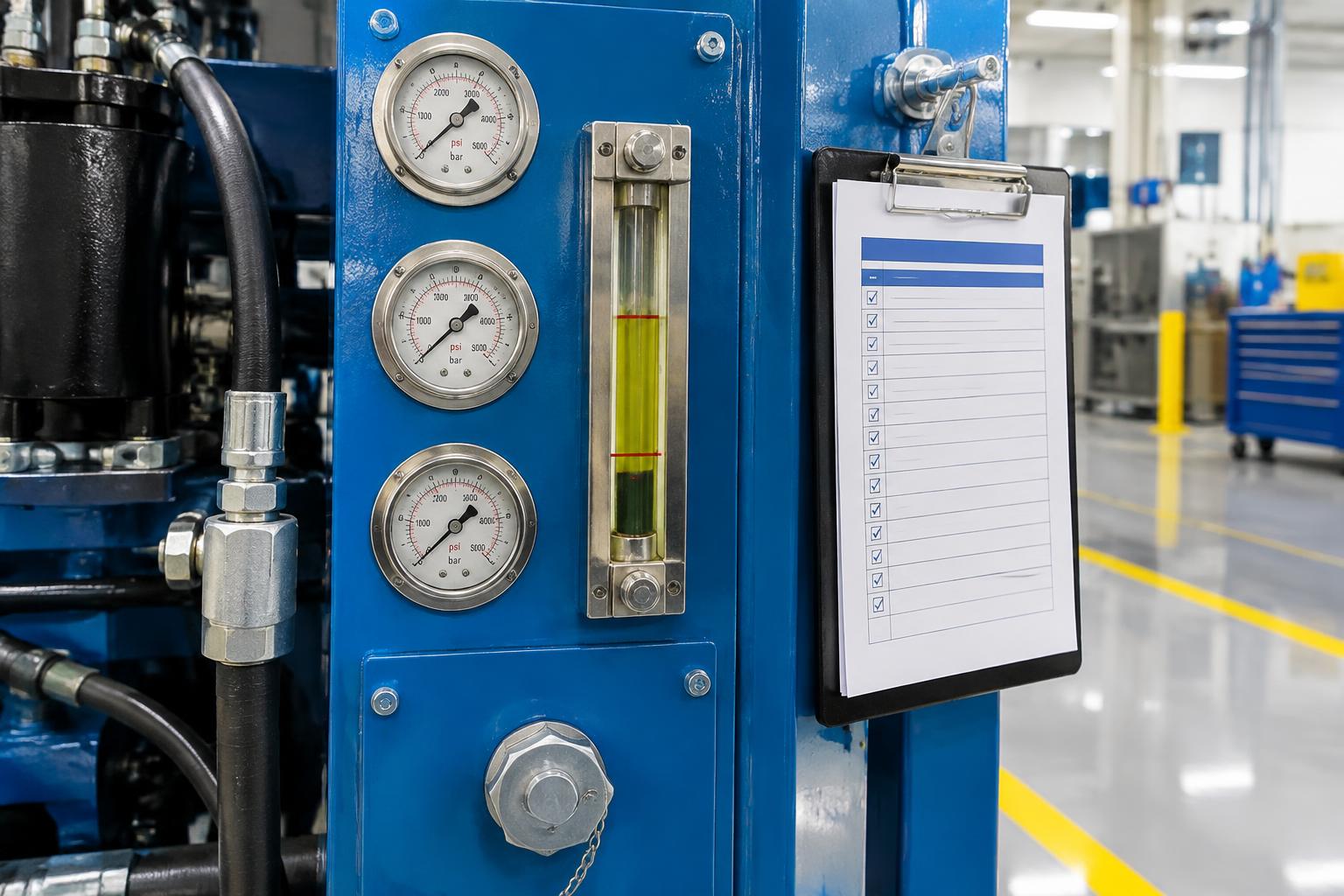
Operators see failures before anyone else
An operator spends eight hours a day next to their machine. They hear the new noise, feel the unusual vibration, notice the oil seep — weeks before a sensor or monthly inspection detects them. Autonomous maintenance (a pillar of TPM, Total Productive Maintenance) turns that proximity into a system: structured inspections, anomaly reporting and clearly defined routine care.
What operators do — and don't do
| Task | Operator | Maintenance technician |
|---|---|---|
| Daily visual inspection (leaks, noises, levels) | Responsible | Training support |
| Approved routine cleaning and lubrication | Responsible (after training) | Defines method and frequency |
| Anomaly reporting in the system | Responsible | Analyzes and prioritizes |
| Adjustments, repairs, energized work | Never | Responsible |
| Failure analysis and improvement | Contributes (witness) | Responsible |
Training and escalation: the two safeguards
Autonomous maintenance works under two conditions. First, every task entrusted to an operator comes with documented training and a competency check — nobody is asked to "just take a look". Second, the escalation path is crystal clear: the operator reports, they do not repair; maintenance analyzes and decides. When escalation is fuzzy, operators end up either tinkering (safety risk) or staying silent (undetected failures).
Where to start
- Pick a pilot line and two or three simple, high-value inspections.
- Write the inspection points with operators, not for them.
- Respond to every reported anomaly — silence kills the program within weeks.
- Measure: anomalies reported, response time, failures avoided.
Autonomous maintenance does not transfer maintenance work to operators — it adds hundreds of trained eyes where there were only a few.