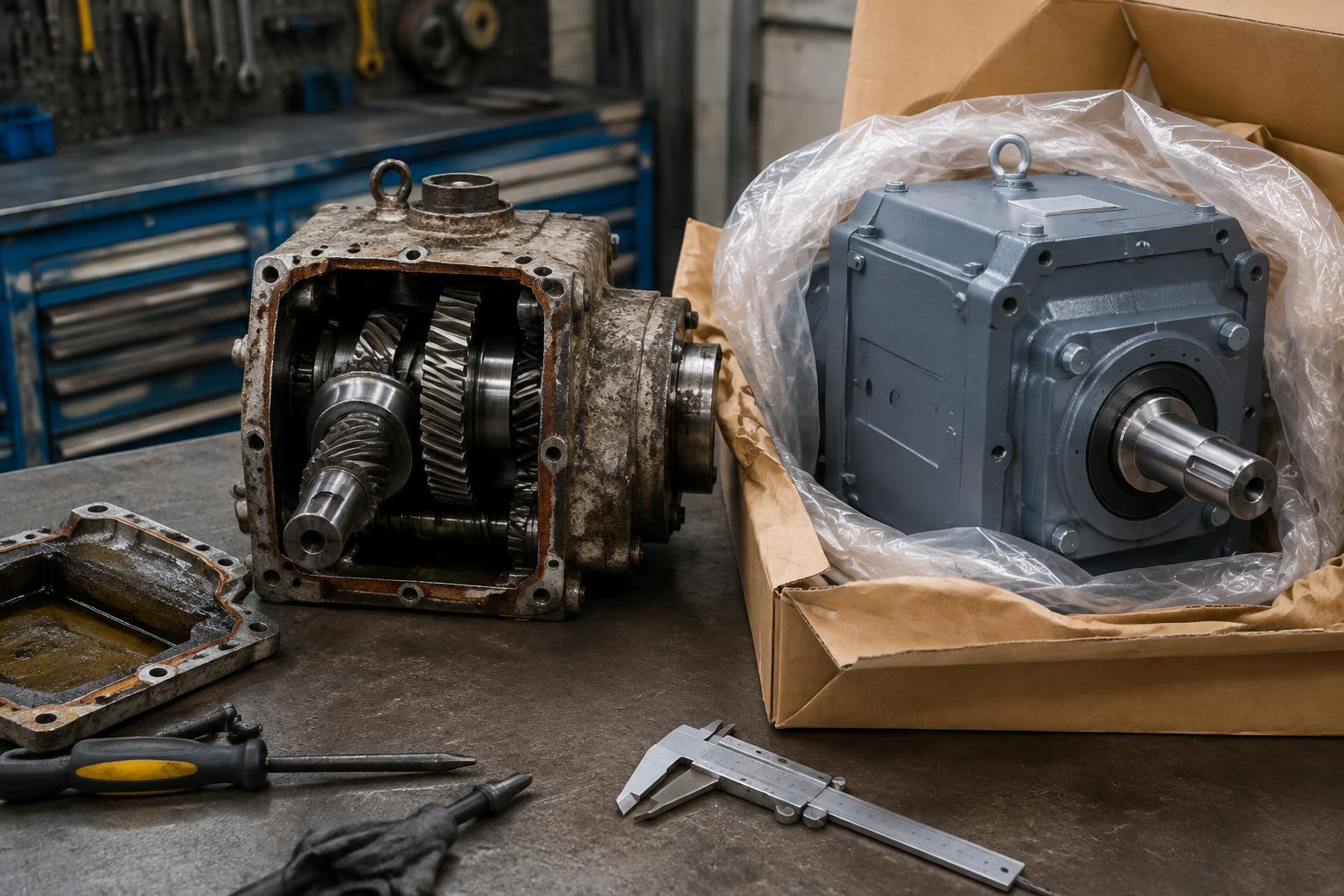
Purchase price is not cost
The repair-replace decision almost always fails the same way: the repair price is compared to the new price, forgetting that true cost includes downtime, energy consumption, future failures, parts availability and remaining life. Equipment that is "free" to repair can be the most expensive of the three scenarios.
Worked example: a 15-year-old compressor
| Scenario | Initial cost | Expected failures (5 yrs) | Energy (5 yrs) | Downtime (5 yrs) | Estimated total |
|---|---|---|---|---|---|
| Repair | $18,000 | 6 (historical data) | $95,000 | $60,000 | $173,000 |
| Refurbish | $45,000 | 3 | $90,000 | $30,000 | $165,000 |
| Replace | $90,000 | 1 | $72,000 (efficient model) | $10,000 | $172,000 |
In this fictional but realistic example, the three scenarios fall within a narrow range — and replacement is not the most expensive despite a triple upfront price. The decision then rests on other criteria: obsolescence (are parts for the old model still manufactured?), the actual condition of the frame, and production constraints (can six more outages be tolerated?).
Criteria that tip the balance
- Obsolescence: unavailable parts or months-long lead times = replacement almost always wins.
- Frame condition: repairing equipment with a fatigued structure only postpones the problem.
- Failure frequency: a plummeting MTBF signals systemic wear, not a part to swap.
- Production constraints: the cost of one hour of downtime changes the whole calculation.
- Energy efficiency: old motors and compressors often cost more in electricity than in maintenance.
Document the assumptions
The decision table's value lies mostly in its assumptions: expected failure count, downtime cost per hour, energy price. Writing them down lets management challenge the numbers rather than the conclusion — and the calculation can be redone when conditions change.