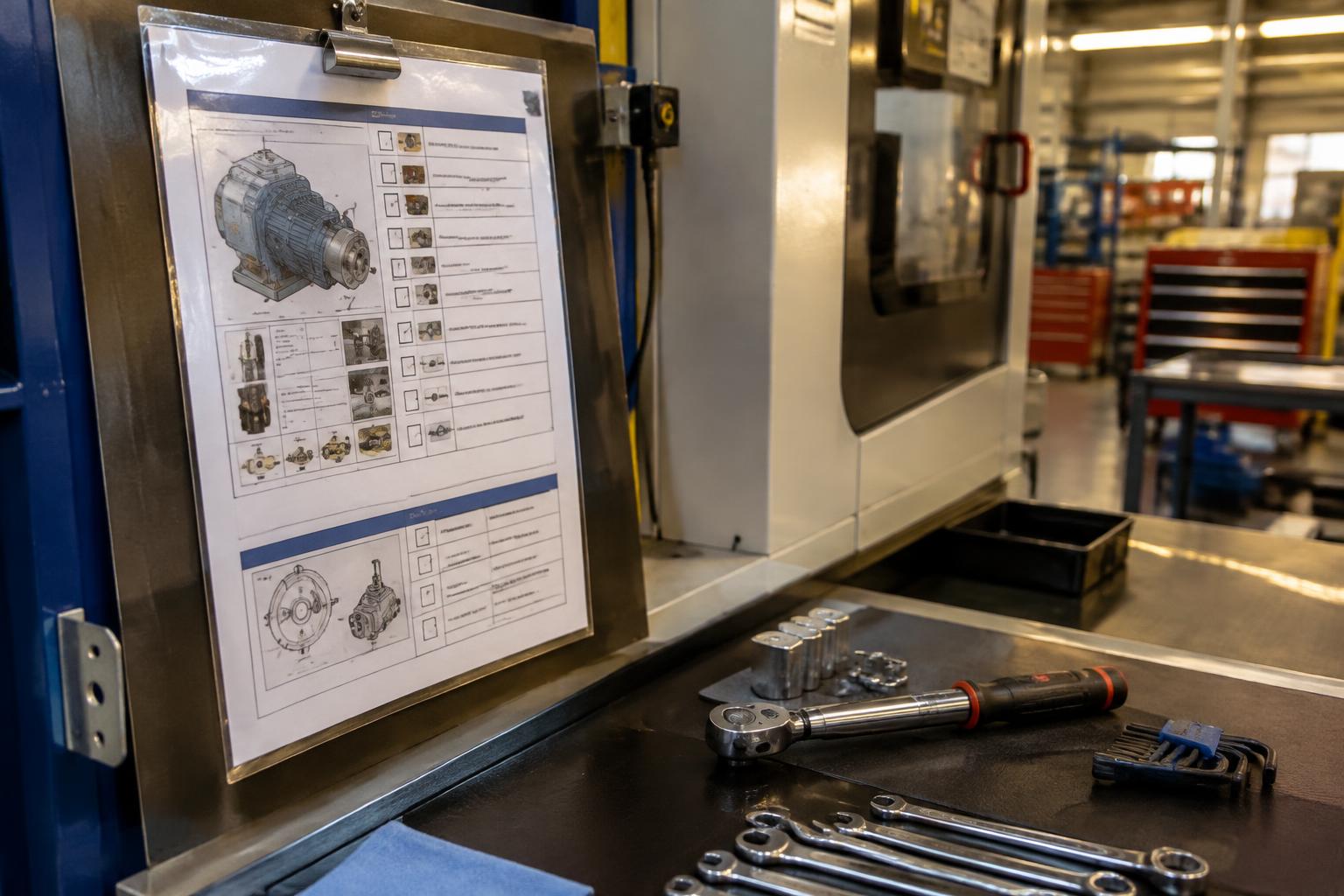
A procedure is judged at the machine
The best maintenance procedure is not the most complete one — it is the one a technician can follow, gloves on, without going back to the office. If it requires guessing a tool, a part or an acceptance criterion, it has failed, no matter how well written.
The six blocks of an effective instruction
- Identification: equipment, procedure number, version and revision date.
- Safety: references to approved procedures (lockout, permits) — never paraphrased in the procedure.
- Resources: tools, parts (with numbers), number of technicians and estimated time.
- Steps: one action per line, imperative verb, with reference values (torques, clearances, levels).
- Acceptance criteria: how to know the work is done right (measurements, tests, photos).
- Feedback: a space to note discrepancies — this is what keeps the procedure alive.
Annotated example: gearbox inspection
"Drain the gearbox oil (ref. procedure 4.2), note any metallic particles, refill with 12 L of ISO VG 220 oil to the sight glass mid-mark, plug torque: 45 N·m. Acceptance criterion: stable level after 10 minutes of operation, no seepage at the gasket." Each line contains an action, a quantity and a reference value — nothing to interpret.
Validation by technicians
A procedure written at a desk and imposed on the floor almost always fails. The method that works: drafting by an experienced planner, trial execution by a technician who has never done the task, revision from their comments, then approval. The most-used procedures are the ones technicians recognize as their own.
A perfect procedure in a binder is worthless; a good procedure, used and improved with every execution, is worth gold.