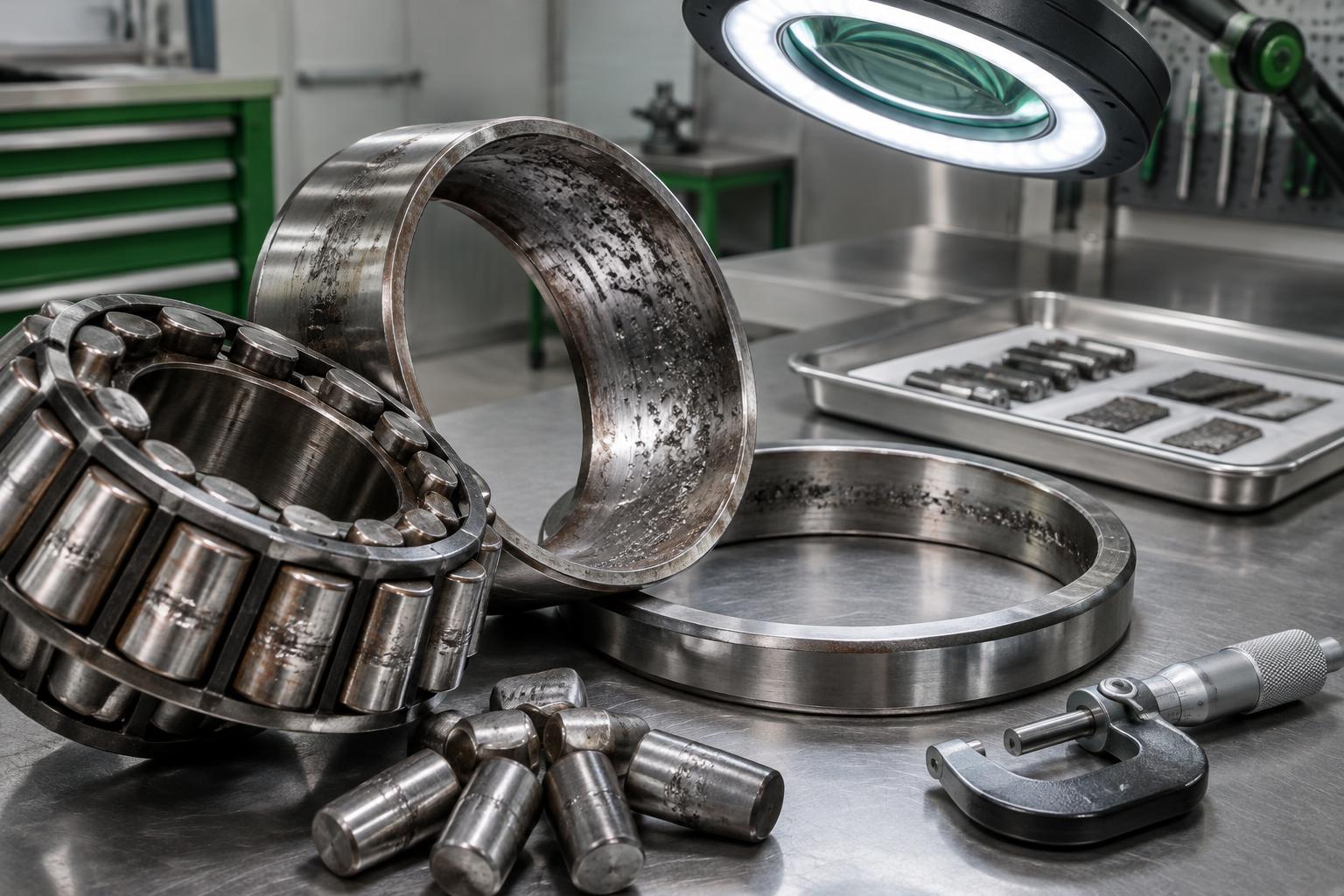
High preventive-task completion does not prove that the right risks are controlled. A plan can be completed in full while missing the mechanism that breaks the equipment. Adding an inspection after repeated failure is tempting but may only increase workload. Distinguish the functional failure, damaged component and cause that created the condition.
Start with a verifiable description
“The pump is unreliable” is not an actionable definition. Describe lost flow, operating conditions, date, symptoms and affected parts. Preserve failed parts and relevant records where safe and authorized. Reconstruct the timeline, including product changes, starts and recent interventions. Compare similar equipment that does not experience the problem.
A decision tree to guide investigation
- Is the defect correctly identified? If not, gather observations before concluding a cause.
- Does the plan contain a task addressing this failure mode? If not, assess an appropriate task, modification or alternative strategy.
- Could the task detect the defect before functional failure? If not, review the method or lead time, not just the calendar.
- Was the task performed against measurable instructions? Check recorded values, tools and access conditions.
- Have operating conditions changed? Check load, contamination, environment and operating point.
- Does failure follow an intervention? Examine installation, lubrication, alignment and recommissioning.
Five explanations to examine, not assume
One possibility is that preventive work targets wear while failure depends on contamination. Another is that a defect emerges and progresses between inspections. A third is ambiguous instructions or missing measurements. A fourth is operation outside intended conditions. A fifth is an intervention introducing a defect. These are investigation paths, not diagnoses; observations and tests must confirm or reject them.
Fictional example: replacing a bearing is not the whole answer
A motor receives a new bearing at every failure, yet downtime returns. Investigation finds that vibration history and grease quantities are not recorded. Do not immediately declare over-lubrication: first check the product, amount, installation, load and damage evidence. If a cause is confirmed, address that cause with before-and-after measurement. Replacement may be necessary for repair, but does not establish defect elimination.
Close the loop after correction
Assign an owner, due date and verification criterion to each action. Compare events over equivalent exposure: operating hours, cycles or output. A failure-free week does not demonstrate improvement when the mechanism previously took months to appear. Update work instructions, training and CMMS data so that the solution survives personnel changes.
ISO 14224 provides a reliability-data framework for petroleum, petrochemical and natural-gas industries. Its consistency principles can inform structured collection elsewhere without presenting the standard as a universal obligation. Data quality supports investigation; it does not replace physical evidence or technical validation.