Here, “preventive” means tasks scheduled by time or usage; “predictive” means monitoring intended to detect degradation and guide intervention. Terminology varies, and condition-based maintenance is sometimes distinguished from predicting remaining life. Define the terms in your program. Select an approach for a failure mode, not once and for all for an entire asset.
Four conditions for useful monitoring
- The defect must produce a measurable sign using an appropriate method.
- The sign must appear early enough to prepare action before functional failure.
- The team needs the skills, parts and access required to act.
- The controlled risk must justify the full cost of monitoring and decisions.
The interval between detectable defect and functional failure is often called the P-F interval. It is not a guaranteed constant: it depends on the mechanism, load and measurement method. Inspection frequency must leave time to confirm the defect, prepare parts and act. An accurate measurement taken too late provides insufficient protection.
A selection matrix requiring technical validation
| Situation | Approach to consider | Essential condition |
|---|---|---|
| Critical motor bearing with detectable degradation. | Vibration monitoring alongside necessary tasks. | Interpretable measurements and time to act before failure. |
| Component with cycle-related wear and a documented limit. | Usage-based replacement or inspection. | Technical rationale and applicable constraints respected. |
| Non-critical component without an actionable precursor. | Managed corrective work if consequences are acceptable. | Assessed risk, available part and organized recovery. |
| Hidden protective function. | Appropriate functional verification under requirements. | Specialist validation; do not substitute a generic sensor. |
Why a sensor is not enough
A program needs a baseline, signal-quality controls, alert criteria, an analysis owner and a path to a work order. Check mounting, measurement conditions and comparability. Plan for false positives and missed defects. ISO 17359 offers guidance for establishing a monitoring program; it does not guarantee that a technology suits every asset.
Fictional example: a pump with long preparation time
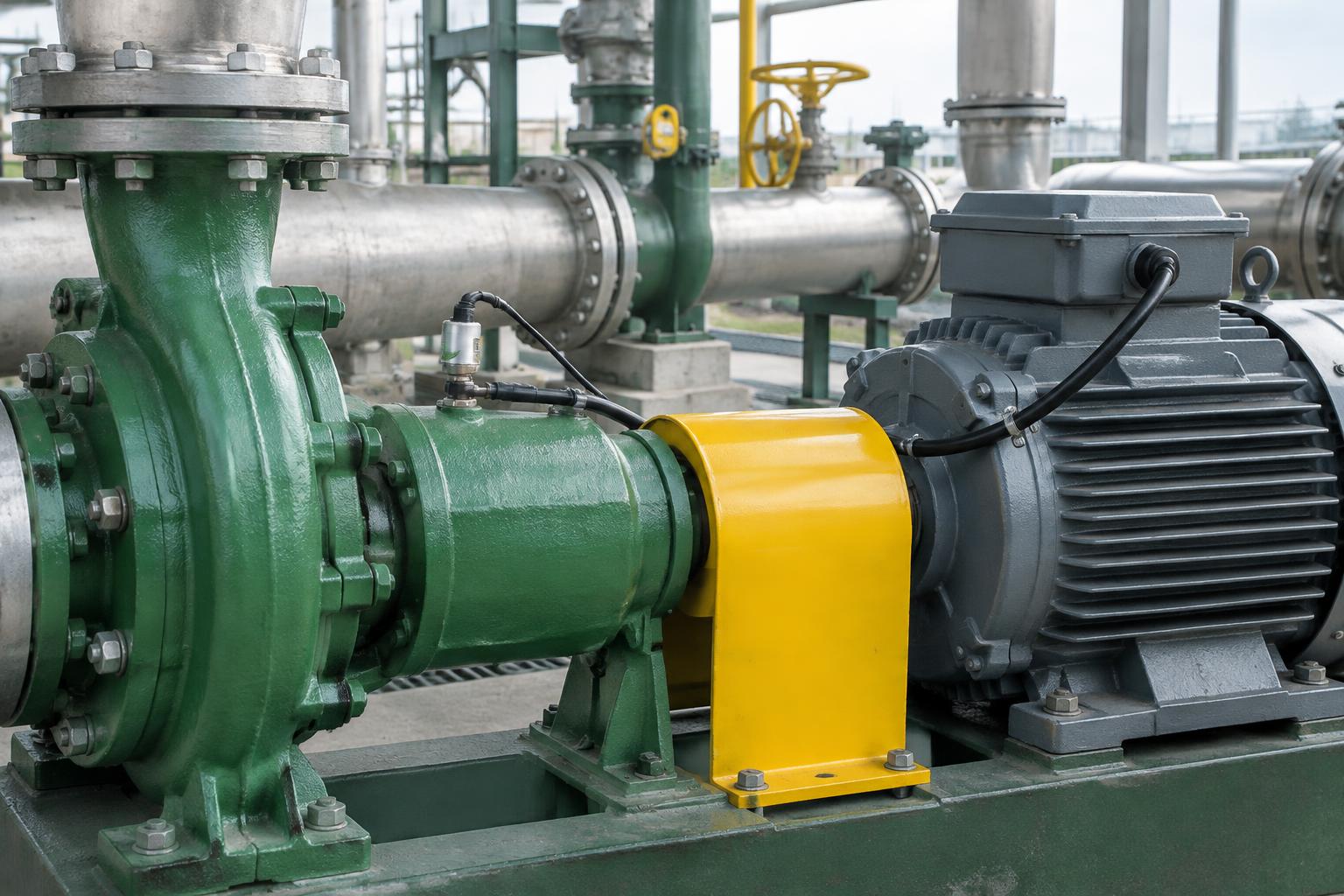
A critical pump shows a degradation sign weeks before some failures, but the part has a long lead time and access depends on a production shutdown. The decision is not just about the sensor: verify whether the signal arrives early enough, whether a part should be stocked and whether an intervention window exists. Without these conditions, monitoring may inform the team without enabling failure prevention.
Start with a measurable pilot
Select an asset family with defined risk and usable information. Record installation, analysis and intervention costs, then compare confirmed defects and downtime over comparable exposure. Do not remove mandatory tasks or critical checks solely on the basis of a pilot. Expand when decision quality and observed effects justify the effort, not because a technology has become popular.