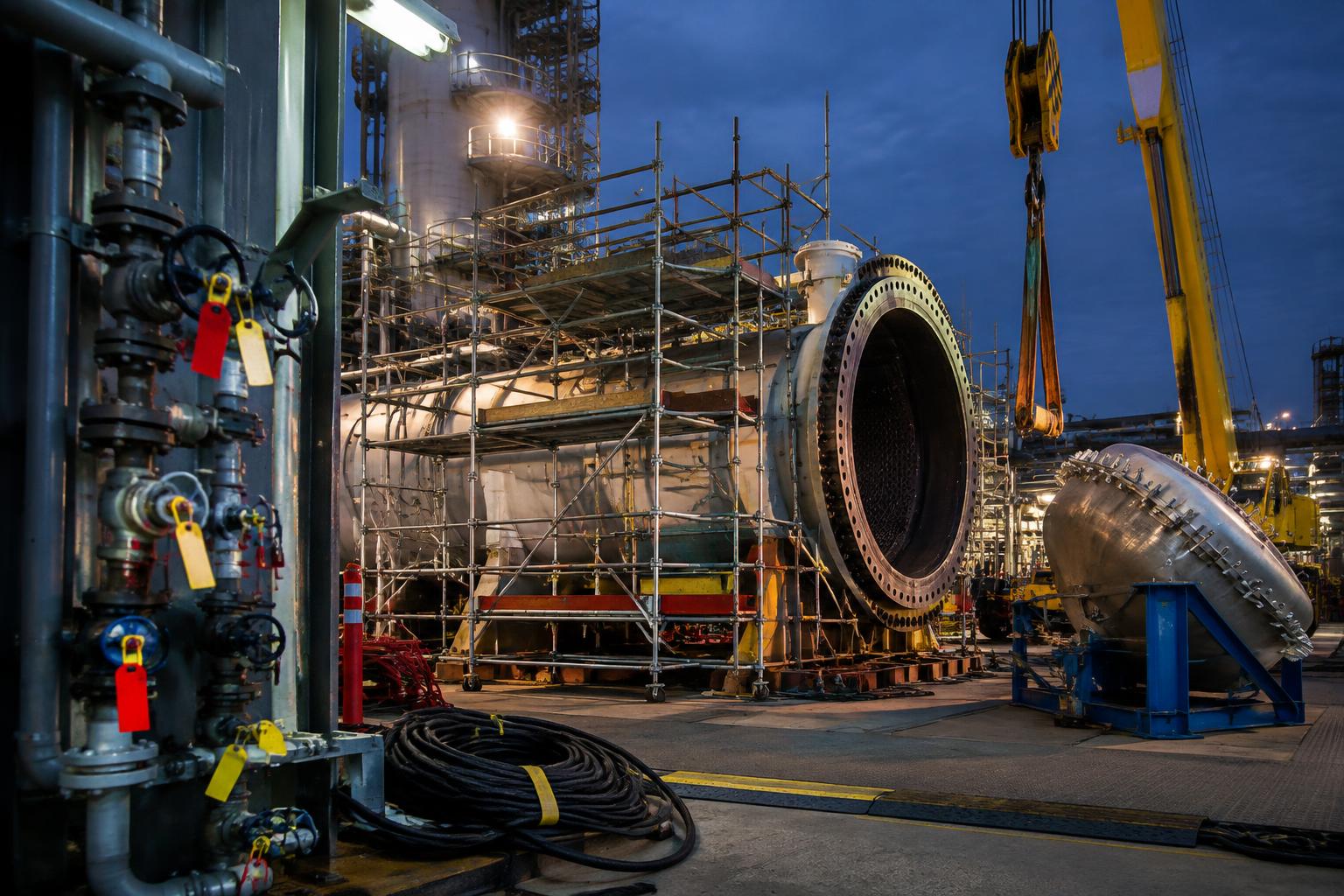
A shutdown is won months before day one
The cost of a major shutdown is rarely decided during execution: it is decided in the months of preparation. Each hour of upfront planning typically saves several hours of improvisation during the shutdown, when every hour costs the price of lost production plus mobilized crews.
1. Define and freeze the scope
Scope gathers all work that can only be done with the machine down. Each item must be justified: why now, why during this shutdown? A scope freeze date (often 6 to 12 weeks before the shutdown) is then defended by a committee that assesses each addition for risk and schedule impact.
2. Prepare complete work packages
Each package contains the work procedure, parts (reserved and verified), permits, lockout procedures, special tools and acceptance criteria. A "ready" package means a crew can start without asking anyone for anything.
3. Coordinate contractors
Contractors must know their packages, zones, time slots and site rules before arriving. One coordination meeting per contractor a few weeks before the shutdown prevents most of the access and crane conflicts that paralyze sites on day one.
Readiness checklist
- Scope frozen and approved, with a documented process for late additions.
- 100% of work packages complete: parts in hand, permits prepared, procedures validated.
- Shutdown schedule with identified critical path and explicit buffers.
- Return-to-service plan: tests, regulatory inspections, signed restart criteria.
- Decision structure during the shutdown: who decides what, within how long.
Managing late additions
The golden rule: a late addition must demonstrate that it does not touch the critical path, or that it removes a risk greater than the one it creates. Any addition accepted without this analysis is a bet — and bets are paid during return to service, the most expensive moment of the shutdown.